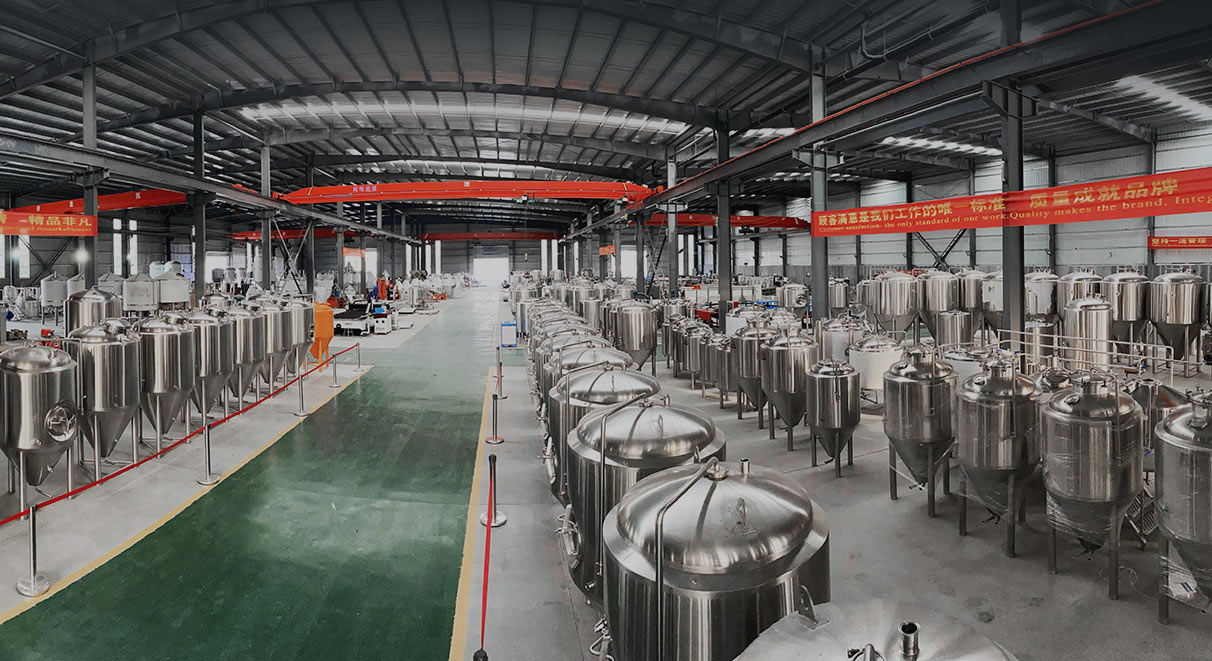
A turn-key brewery reduces startup risk by putting process design, tanks, utilities, controls, piping, installation, commissioning, and training under one engineering scope. That matters in a U.S. market where 529 craft breweries closed in 2024 while only 430 opened, and craft beer volume fell 3.9%. A properly sized system can prevent idle brewhouse hours, undersized fermentation capacity, weak glycol performance, and late building modifications. The main financial benefit comes from finding engineering mismatches before fabrication and installation. Clear utility data, tested controls, documented interfaces, and planned expansion space also make construction budgets and production schedules easier to estimate.
A brewery startup has little room for avoidable engineering expense. The Brewers Association recorded 9,796 U.S. craft breweries in 2024, but the market produced 23.1 million barrels, 3.9% less than in 2023. Total craft retail sales still reached about $28.8 billion, so new operators are entering a large market with tighter production economics rather than automatic volume growth.
That market environment changes how equipment should be purchased. Buying a 10-barrel or 20-barrel brewhouse first and calculating the rest later can leave fermentation, cooling, cellar space, packaging, or utilities out of proportion. Turn-key engineering starts with expected annual output, beer styles, batch frequency, fermentation time, sales format, working days, and realistic tank occupancy.
A simple capacity check shows why. A 20-barrel brewhouse completing two batches per brewing day can produce 40 barrels of wort, but ten 20-barrel fermenters provide only 200 barrels of nominal cellar space. If an average beer occupies a fermenter for 14 days, production planning must account for cleaning, filling, transfer, conditioning, and occasional longer-residence products before assuming full tank turnover.
Nominal tank volume is not the same as usable annual output. Scheduling losses of only 10% can remove more than five weeks of theoretical production time from a 52-week operating year.
Once tank occupancy has been modeled, utility sizing becomes easier to calculate. Refrigeration is a common example because the glycol system may need to support active fermentation, cold crashing, bright tanks, cold rooms, and wort cooling during the same working period. A system designed around average demand can struggle when several tanks need cooling at once.
Heating deserves the same treatment. Steam, electric elements, or direct-fire systems must match vessel size and required heating rates, while the building must supply enough electrical service, gas, ventilation, and water. A late electrical-service change can affect panels, cable sizes, breakers, transformers, contractor work, and inspection schedules, so utility loads should be issued before equipment leaves the factory.
| Area checked before fabrication | What should be confirmed | Startup problem reduced |
|---|---|---|
| Brewhouse and cellar | Batch volume, tank count, occupancy days | Idle brewing capacity |
| Glycol system | Peak cooling demand, tank temperatures | Slow cold crashing |
| Electrical system | Voltage, phase, connected load | Site rewiring |
| Water and drainage | Flow, pressure, floor capacity | Cleaning delays |
| Controls | Sensors, valves, motors, I/O points | Commissioning rework |
Utility calculations also influence the physical layout. A fermenter that fits on a drawing may still require additional overhead clearance for installation, piping, pressure fittings, or future maintenance. Longer product lines also hold more beer and cleaning solution, so tank location affects transfer losses, cleaning time, pump selection, and operator movement.
The same layout work should leave room for future production changes. Adding four fermenters in 2028 is easier when the original design already includes floor positions, glycol header capacity, drainage access, electrical allowance, and piping routes. Installing every future tank on day one may tie up capital; reserving the infrastructure can support later expansion without rebuilding the cellar.
That approach also reduces interface problems between suppliers. A standalone brewhouse, chiller, CIP skid, control panel, and packaging machine can each meet its own specification yet still require adapters, revised software logic, different fittings, or field modifications when connected. A Brewery/Distillery/Winery All-In-One Solution places more of those interfaces inside one engineering scope before shipment.
One missing interface can stop several working systems from operating together. Factory review costs less than discovering the same mismatch after freight, installation, and contractor mobilization have already been paid.
Factory testing therefore matters more than appearance inspection. Tanks can be checked for fabrication quality and specified connections; pumps can be verified for direction and intended duty; panels can be powered and inspected; sensors, motors, valves, and control sequences can be checked against approved drawings. A punch list completed before shipment keeps many corrections inside the manufacturing stage.
Installation then becomes a controlled extension of the engineering work instead of a separate construction exercise. Equipment positioning, piping slope, pump orientation, glycol connections, electrical terminations, valve access, drains, and service clearances can be checked against the same documents used during design. Fewer undocumented site changes also make later maintenance easier.
Commissioning should follow installation with water tests before beer is placed at risk. Water can expose leaking connections, weak flow, wrong pump rotation, incorrect valve states, temperature-sensor errors, or unsuitable control sequences. The team can then test heating, transfers, cooling, pressure behavior, alarms, and CIP circulation before a commercial batch occupies valuable tank time.
Cleaning performance deserves special attention because sanitation failures can consume both product and capacity. Brewers Association draught guidance recommends cleaning beer lines at least every 14 days and specifies 2% caustic solution for routine cleaning of well-maintained lines, illustrating how documented concentration and frequency matter in beverage sanitation.
The production side needs the same discipline. CIP design should account for vessel geometry, spray devices, pump flow, return flow, solution concentration, temperature, contact time, drainability, and pipe routing. Oversized pipes can reduce cleaning velocity, while poorly placed branches can retain liquid after cleaning, so hygienic design has to include the complete route rather than only stainless-steel vessel surfaces.
Food-safety documentation provides another reason to plan the complete system early. FDA preventive-control rules require covered food facilities to evaluate reasonably foreseeable biological, chemical, and physical hazards and, where required, establish written controls, monitoring, corrective procedures, and verification. Equipment layout, sanitation access, recordkeeping, and process control can therefore affect the facility's operating procedures from the first production year.
Worker safety belongs in the same engineering package. Carbon dioxide is particularly relevant around fermentation and beverage service because it is colorless, odorless, and denser than air. OSHA lists an 8-hour permissible exposure limit of 5,000 ppm; a 2021 OSHA brewery case recorded an employee exposed to 5,812 ppm over an 8-hour time-weighted period.
Ventilation, CO₂ monitoring, detector placement, cylinder or bulk-storage location, confined areas, and exhaust design should therefore be reviewed before production starts. OSHA also notes that concentrations around 100,000 ppm, or 10%, can cause unconsciousness or death, which makes fermentation rooms and low areas inappropriate places for casual ventilation assumptions.
Regulatory paperwork can also affect the construction plan. TTB requirements for U.S. brewery operations include approved premises information, and changes to the construction or use of bonded premises can require an updated diagram. Altering the approved production layout after equipment installation may therefore create paperwork as well as contractor work.
A turn-key scope can reduce that rework when equipment drawings, process-flow diagrams, utility schedules, tank data, electrical information, and site layouts are prepared before installation. Local building, fire, electrical, wastewater, alcohol, and food rules still require review by the appropriate authorities and licensed professionals; equipment supply does not replace local approval.
Budget control improves for the same reason. A low equipment quote can omit freight, rigging, process piping, glycol piping, electrical installation, platforms, boiler work, water treatment, drains, commissioning, spare parts, or operator training. A proposal that identifies supplied and owner-supplied items line by line gives investors a more usable installed-cost estimate.
| Cost item | Questions to settle before purchase |
|---|---|
| Freight and unloading | Who pays ocean or inland freight, rigging, crane work? |
| Utilities | Are chiller, boiler, air compressor, water treatment included? |
| Installation | Are piping, wiring, insulation, and labor included? |
| Commissioning | How many startup days and production tests are included? |
| Support | Are manuals, training, remote help, and spare parts listed? |
Operator training closes the gap between installed equipment and repeatable production. A startup team should be able to run normal sequences, respond to alarms, verify temperatures and pressures, complete cleaning cycles, inspect pumps and seals, and identify when a condition needs engineering support. Training also reduces dependence on one brewer remembering undocumented settings.
Documentation makes that training reusable. P&IDs, electrical drawings, valve lists, instrument lists, spare-parts lists, maintenance schedules, operating instructions, and backup control files can shorten troubleshooting after the commissioning team has left. In 2025, U.S. craft brewery count fell to 9,578, down 2.9% from 2024, so preserving production time matters in a market where more operators are competing for fewer volume gains.
A turn-key project works best when the supplier is responsible for measurable interfaces, not merely for delivering stainless-steel equipment. The purchase scope should state capacities, utility requirements, included controls, connection points, documentation, testing, installation duties, commissioning work, training, warranty terms, and exclusions. That level of definition gives the owner specific items to verify before payment milestones, shipment, and production startup.